Transforming Font Subscriptions Through Iterative Research
Led baseline-to-prototype research for Monotype’s subscription model, measuring experience, value perception, and conversion likelihood across 40 participants and 3 iterations.
The Challenge
Monotype, the company behind fonts.com, MyFonts, and thousands of typefaces used globally, faced a core business problem: a 0.5% conversion rate. Customers returned to make a purchase only once every 1.3 years.
The vision was a subscription-based service allowing access to a library of 9,000 desktop and web fonts with minimal worry about licensing, sharing, and usage. The challenge: would designers who traditionally bought fonts perpetually embrace a subscription model?

Research Mission: Put real users in front of websites offering subscription-based font services, and watch them use the sites. Measure user experience, perceived value, conversion likelihood, and licensing comprehension across iterative prototypes.
Phase 1: Baseline Usability Testing
Tested 40 participants (12 locally, 28 remotely) from the design industry who identified as the target audience. The approach: pretest contextual inquiry to understand expectations around font pricing and purchase factors, followed by concurrent think-aloud protocol while using four competitor sites.
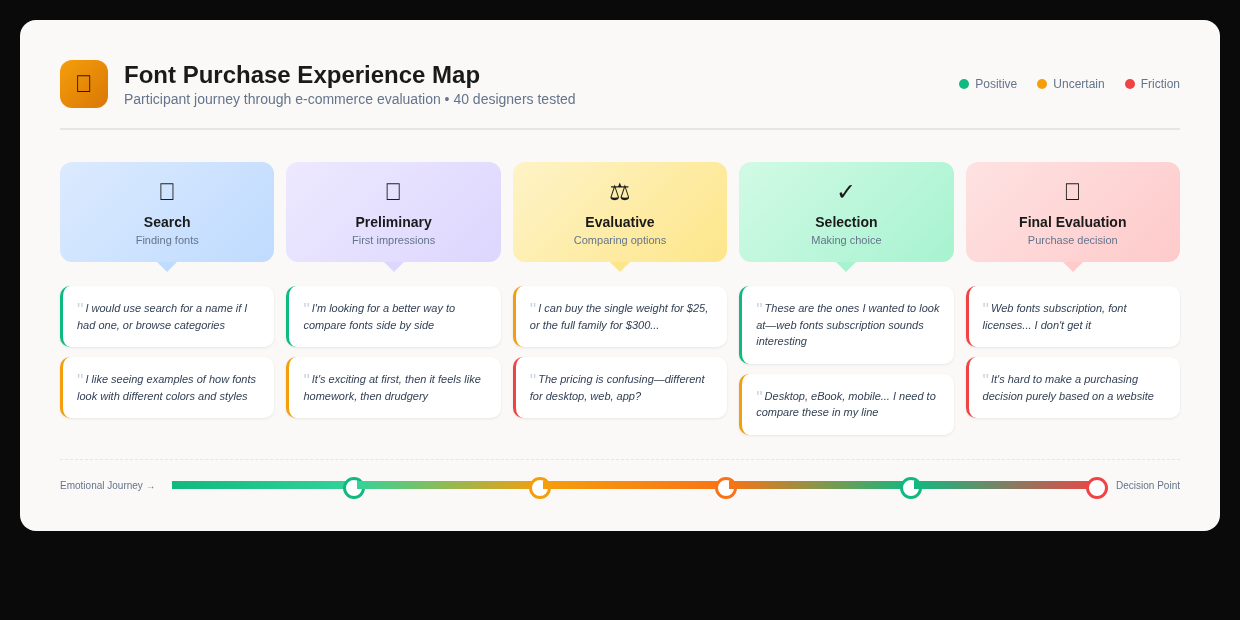
Four key research areas measured:
- User Experience (UX): Measured qualitatively from participant narration, and quantitatively using the System Usability Scale (SUS) and Net Promoter Score (NPS).
- Perceived Value and Value Building: Measured by observing site behaviors and comments surrounding price points.
- Conversion Likelihood: Post-test contextual inquiries asking how likely participants would be to make a purchase from each site.
- Licensing Comprehension: Measured by observing participant understanding of licensing terms and questions that arose.
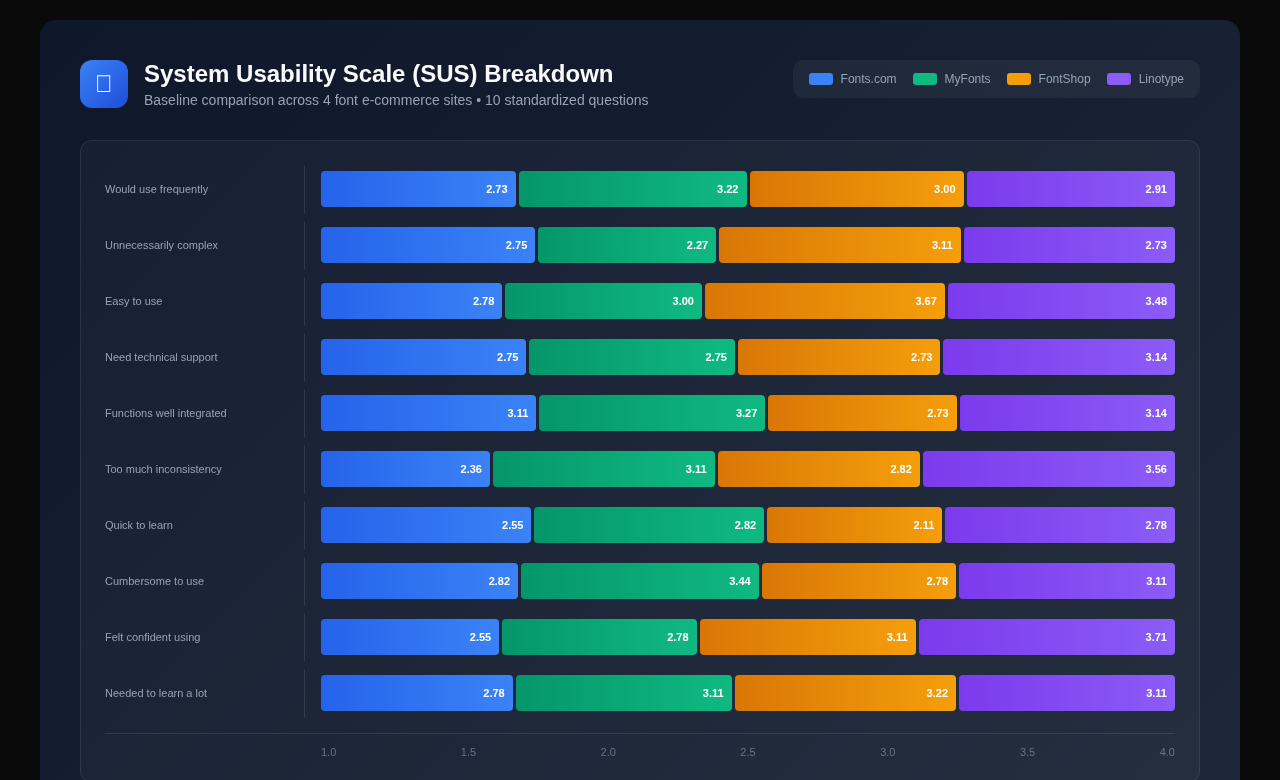
Baseline Findings
Value Building Patterns: Participants built value around fonts over time as they discovered flexibility, versatility, and general appeal for their project. They justified font-family costs with the number of weights available and anticipated use across multiple projects.
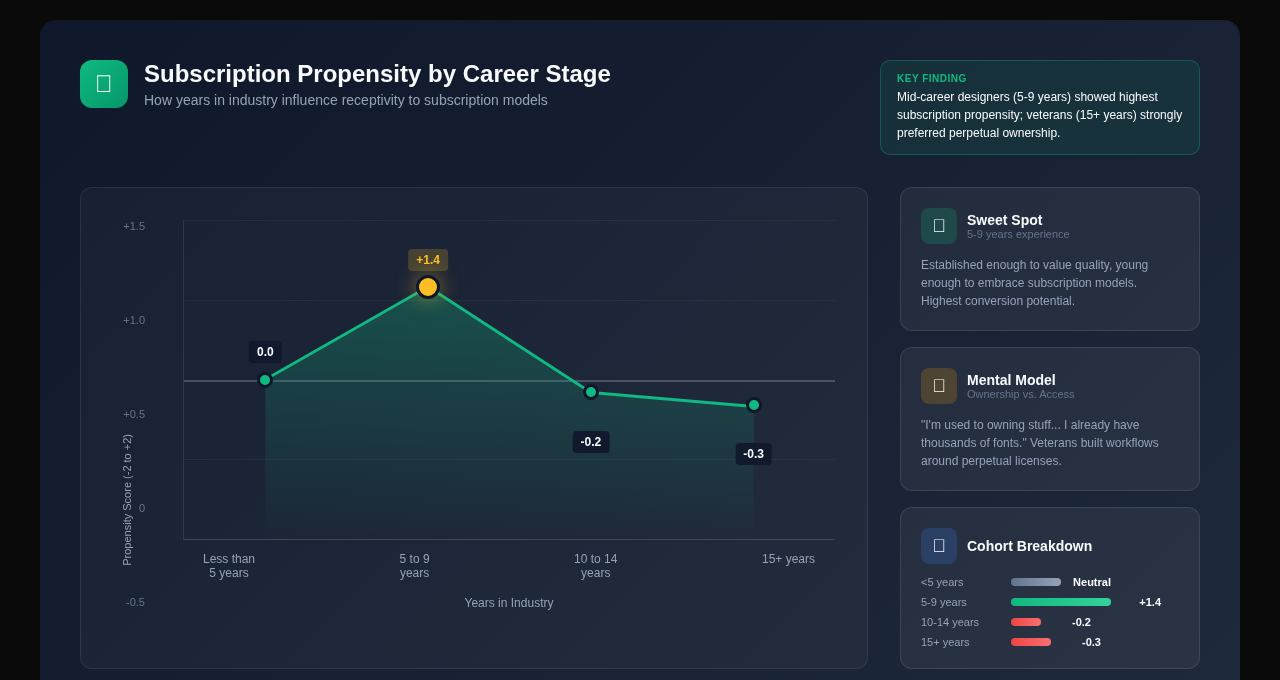
Subscription Receptivity: Existing subscription behavior predicted receptivity. Most participants subscribed to services like Netflix ($10/mo), Adobe Creative Cloud with Typekit ($50/mo), or Spotify ($10/mo). Years in industry mattered: designers with 5 to 9 years of experience showed highest propensity toward subscriptions. Those with 15+ years preferred perpetual ownership.
Licensing Confusion: Licensing options were unclear and left participants confused, asking more questions than they had answers. Differentiations between licensing options created ambiguity. Participants wanted concrete examples of how licensing terms applied to their work.
Iterative Prototype Testing
Iteration I: Low-Fidelity Prototype
Tested fonts.com and MyFonts Desktop Subscription using limited functionality prototypes. 10 participants from the creative professional market. Key findings: initial perception was they would get access to all site fonts, not just Monotype’s Library. The subscription (9,000 fonts for $10/month) was often seen as a banner ad and ignored.
The mental model disconnect was significant: participants expected to download fonts, install on their machine, and use freely. The SkyFonts application, which managed subscription fonts, broke this mental model and needed to be highly transparent.
Iteration II: Increased Fidelity Prototype
Tested fuller prototypes with deeper content and wider experience. 9 participants. Key improvements: participants noticed the offer on the homepage more often. Once on the Desktop Font Subscription plans page, they understood the offer and appreciated clarity around sharing fonts with printers and clients for up to 30 days.
The FAQs section, redesigned based on Iteration I findings, now answered participant questions and built understanding of how subscriptions worked. Overall UX increased from baseline to later prototypes as indicated by both SUS and NPS.
Impact and Outcomes
SUS improved from 35 to 77 across iterations, against an industry benchmark of 68. After implementation, conversion improved from 0.5% to 8% [owner-reported]. The product owner was promoted based on the results. Monotype returned as a client two additional times.
The research revealed that subscription success was about mental model alignment. Designers needed to understand that subscription fonts worked differently than purchased fonts, and that difference needed to be presented as a benefit.
Reflection
Career Foundation: This project demonstrated the full cycle: baseline measurement, iterative testing, mixed-methods analysis, and measurable improvement. The patterns learned here, especially around subscription models and mental model alignment, proved valuable in later healthcare work where patients also brought existing mental models to new service experiences. This is where I learned the mechanics of iterative testing: design, test, revise, retest.