Defining the “N of 1” Customer Through Mixed-Methods Research
How qualitative and quantitative methodologies drove customer understanding and product decisions across auto financing.
The Challenge
The organization adopted a startup mentality: solve for one type of customer first. They knew demographics (age, income, FICO) but did not know who their customers were as people. Traditional demographic segmentation was not providing the understanding needed to design resonant experiences.
The fundamental question: How do you understand customers at a level deep enough to inform experiences they have not had yet?
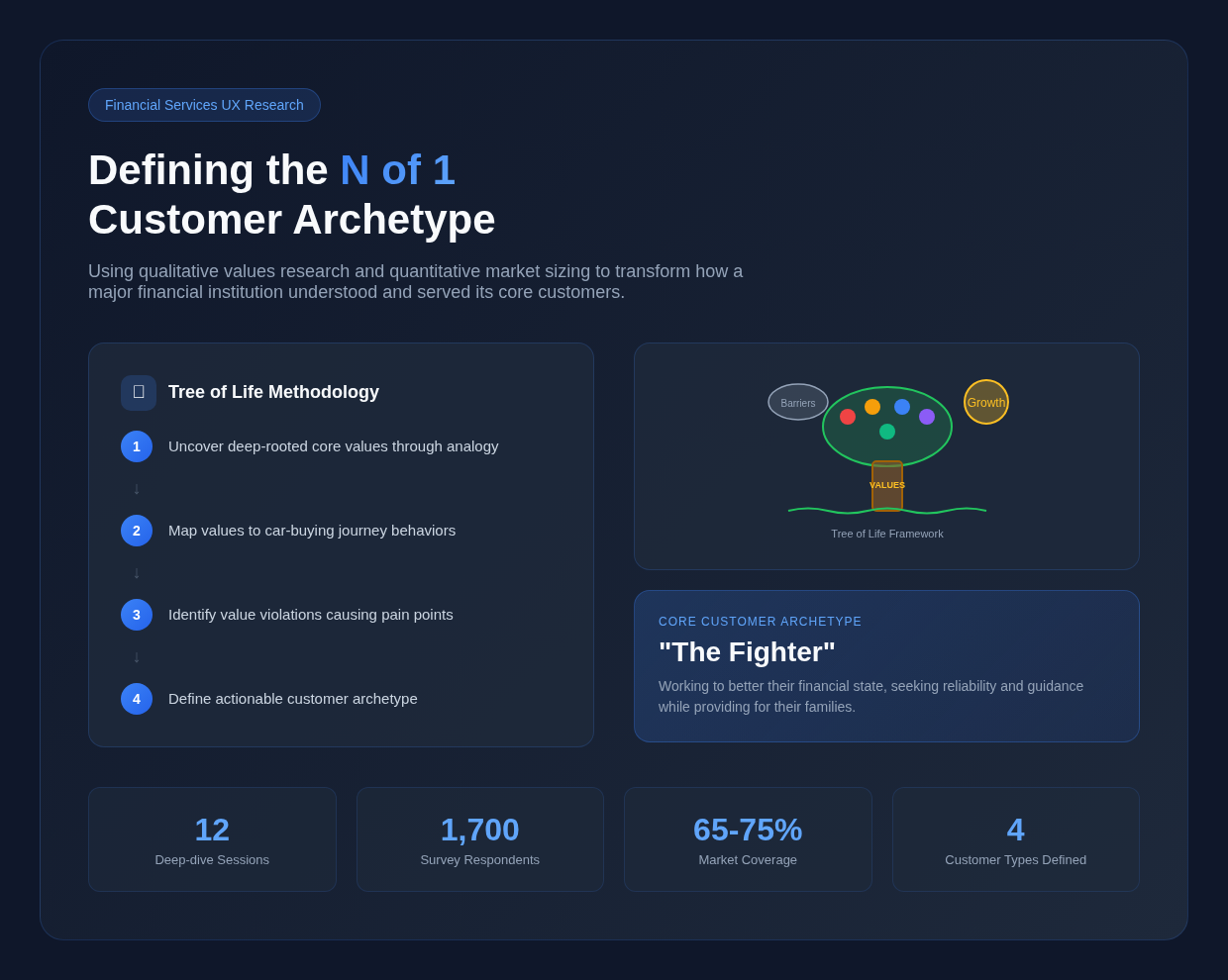
The Tree of Life Methodology
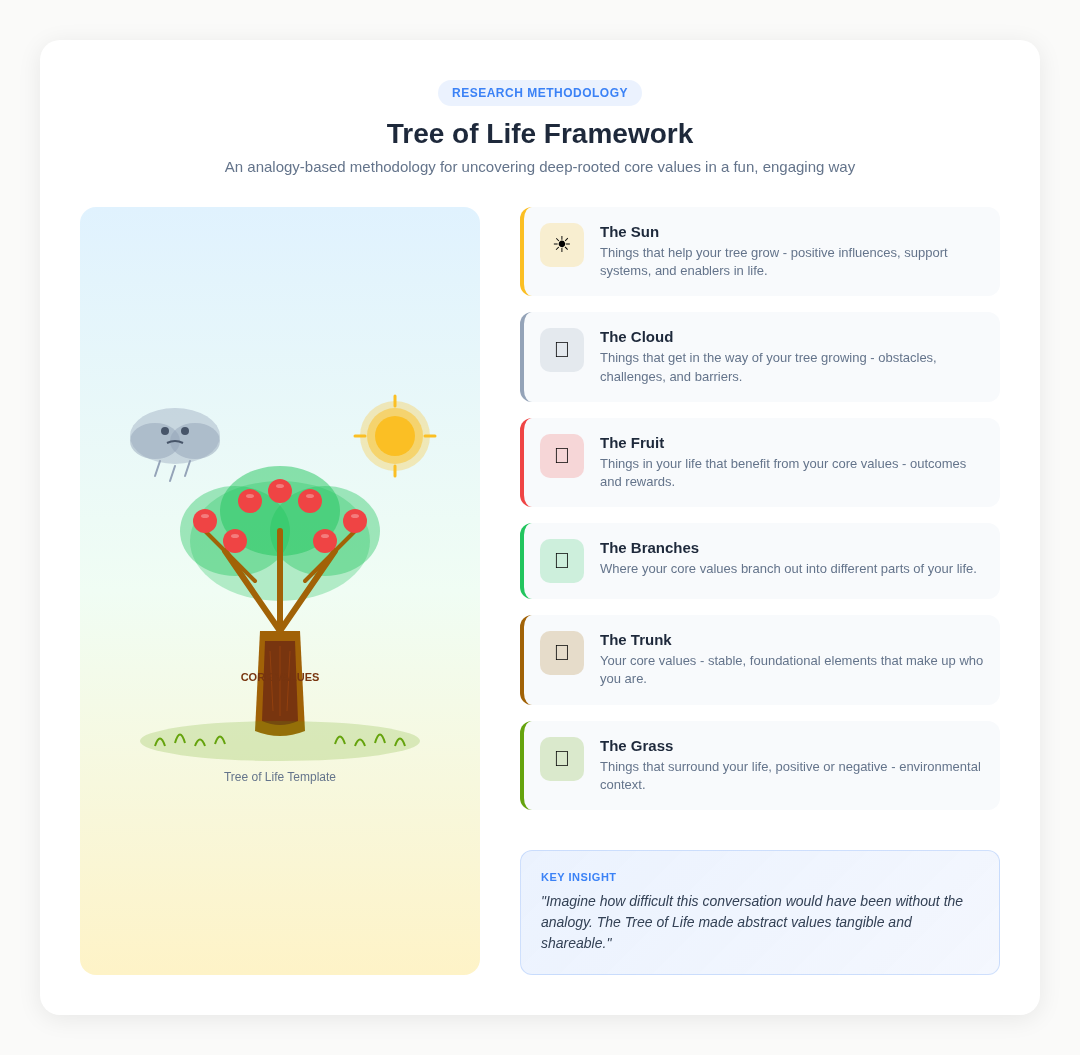
I used the Tree of Life projective technique to uncover deep-seated values through visual metaphors. The technique creates an accessible framework for discussing personal values without feeling clinical or invasive.
Each element of the tree represents a different dimension of a person’s value system: the trunk represents core values, the branches show how those values extend into different life areas, the fruit captures tangible benefits, the sun and clouds represent positive influences and obstacles.
Defining the N of 1: The Fighter Archetype
Over 12 in-person sessions, I identified the core customer through values and decision-making patterns. The core customer was a Fighter: working to better their financial state, discouraged by slow visible progress toward improving credit, the provider for their families, needing a vehicle from a utilitarian standpoint, and skeptical of lending institutions.
The Fighter became the foundation for all subsequent product and research decisions. Teams could design with a specific, deeply understood person in mind.

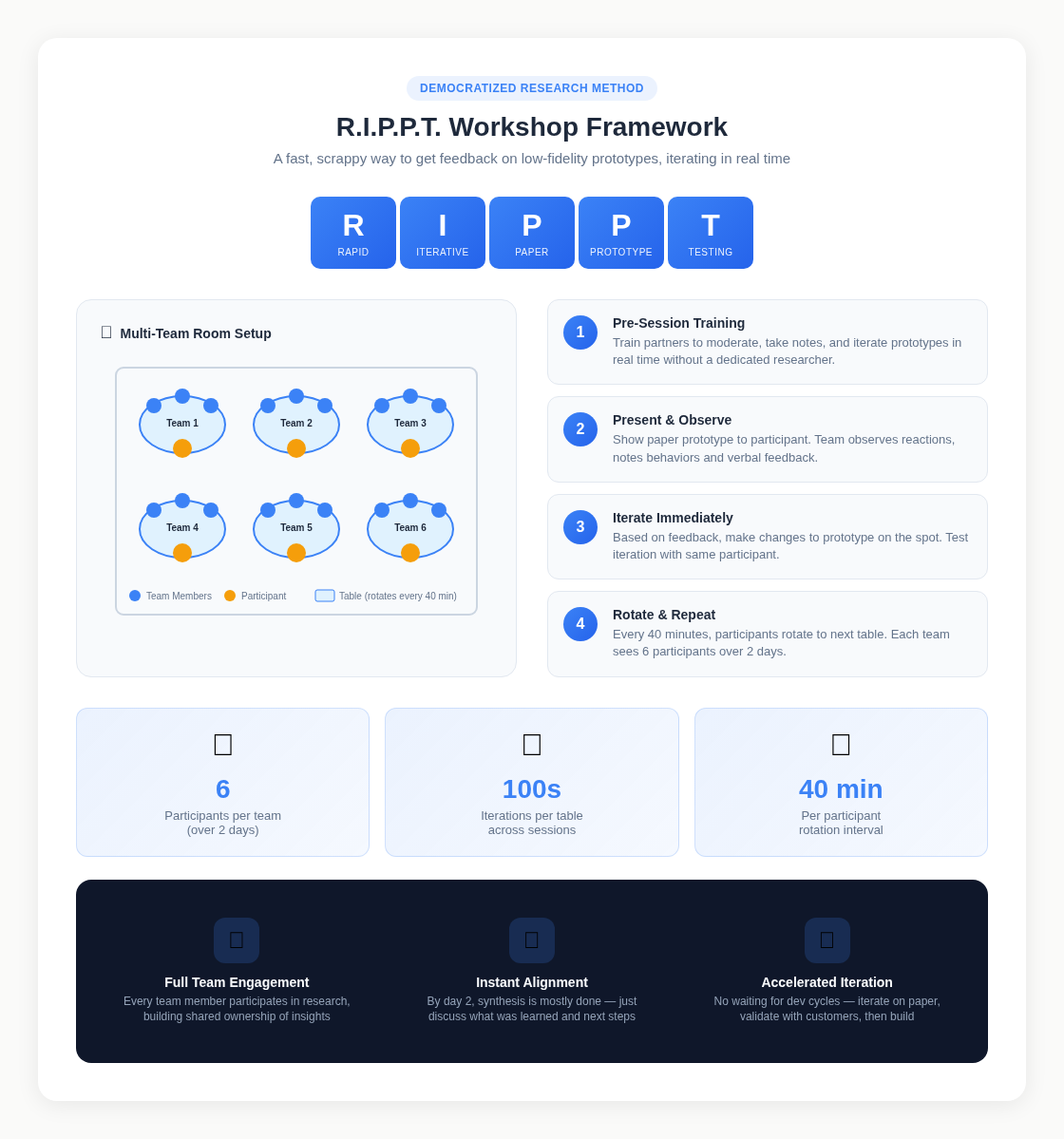
R.I.P.P.T. Workshop Framework
R.I.P.P.T. (Rapid Iterative Paper Prototype Testing) adapted RITE methodology. The key difference: iterations continued until the current participant was satisfied, and the facilitation model put non-researchers in the moderator seat with researcher coaching. 40-minute rotations, 6 participants per group, 2-day format.
Three enablers made it work: executive support, solid recruitment (the typing tool meant participants were verified as the right people), and pre-session training. The framework trained team members to moderate, take notes, and iterate prototypes. By day 2, synthesis was largely complete.
R.I.P.P.T. extended to AR prototype testing using paper cutout windows simulating augmented reality, model cars, and simulated AR banners. AR was not useful: awkward off the lot, too much going on at the lot. The result saved development resources by identifying what not to build.
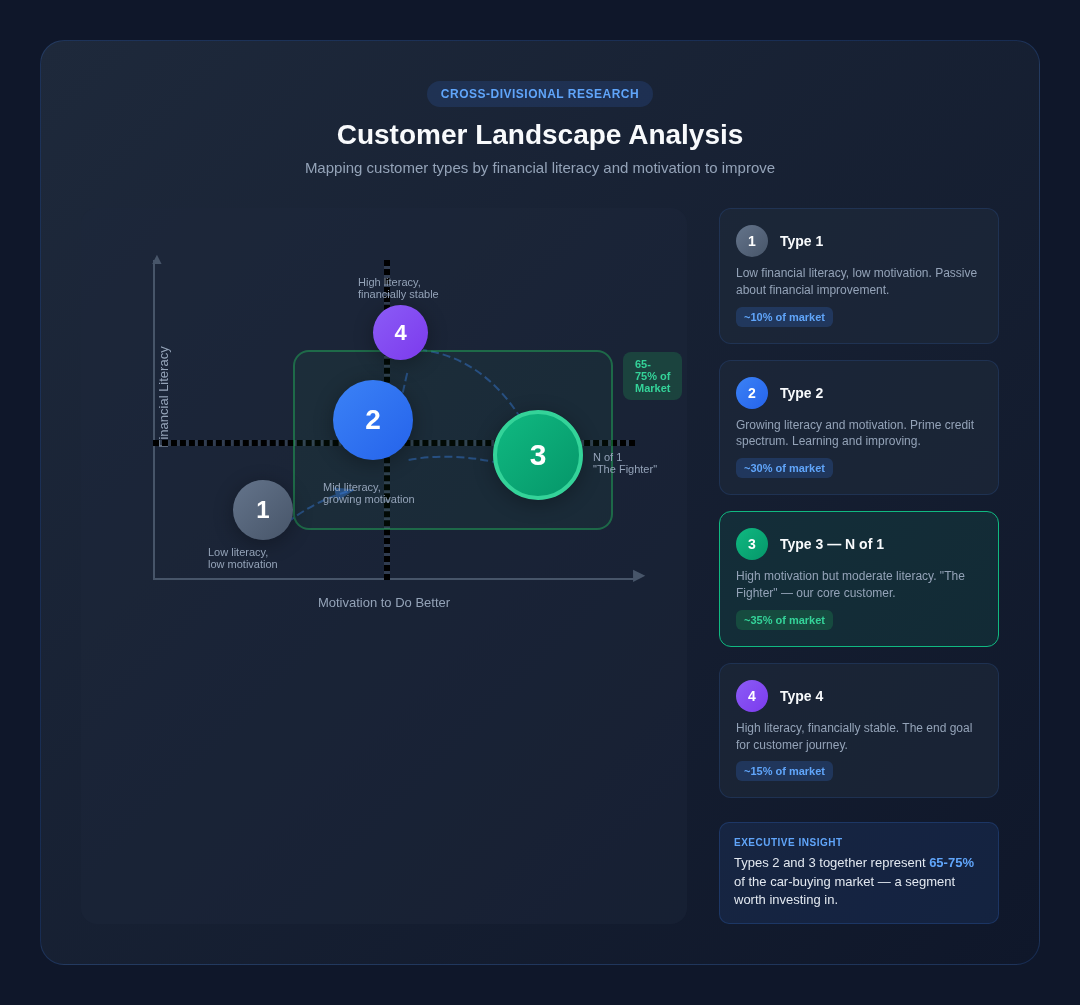
Scaling: Customer Landscape Analysis
When the organization needed to expand beyond the current customer base, I reached across divisions (Card, Bank, CreditWise) and found overlapping customer definitions. Analysis revealed 4 customer types plotted on motivation to improve and financial agency. Used factor analysis and 95% confidence intervals against approximately 1,700 survey respondents to validate. Five typing questions were distilled for scalable identification. Approximately two thirds of the addressable market was covered.
The typing questions transposed into a rigorous recruitment screener for democratized research. The Fighter later received a name: Diana. Diana became a named persona used for 2+ years across multiple product teams.
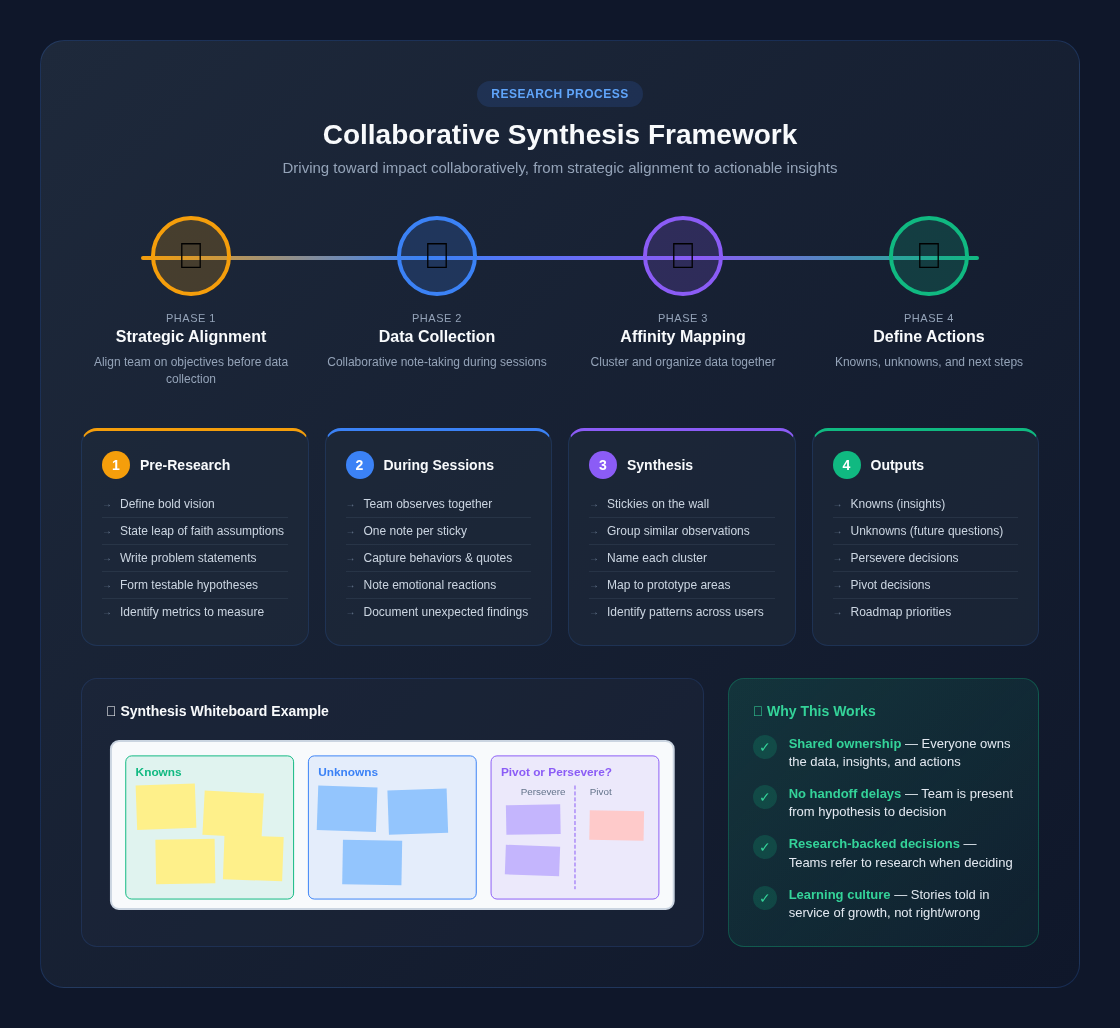
Collaborative Synthesis: Shared Ownership
Effective research impact requires team alignment before, during, and after data collection. When the entire team participates in synthesis, everyone owns the data, insights, and resulting actions.
Cross-Domain Transfer
The Tree of Life technique later transferred from in-person sessions with car buyers to a digital diary study with healthcare members at Ascension. I built a participant panel of 250 members by partnering with marketing. Adapted Tree of Life to dScout: n=12, 2 weeks fielded, 117 video entries. Three archetypes emerged grounded in core values: The Caregiver, The Truth Seeker, and The Loyalist. The technique survived the format change because the underlying structure (projective elicitation of values) is method-independent.
Impact
The Tree of Life methodology and Fighter archetype became foundational tools that continued influencing product decisions for over two years. The archetype validated at scale through quantitative survey work, and the typing questions enabled consistent recruitment across teams.
Reflection
This work demonstrated how investing in deep qualitative understanding creates compounding returns across an organization. The archetype, the typing tool, and the R.I.P.P.T. framework each persisted independently as reusable research infrastructure long after the initial studies concluded.